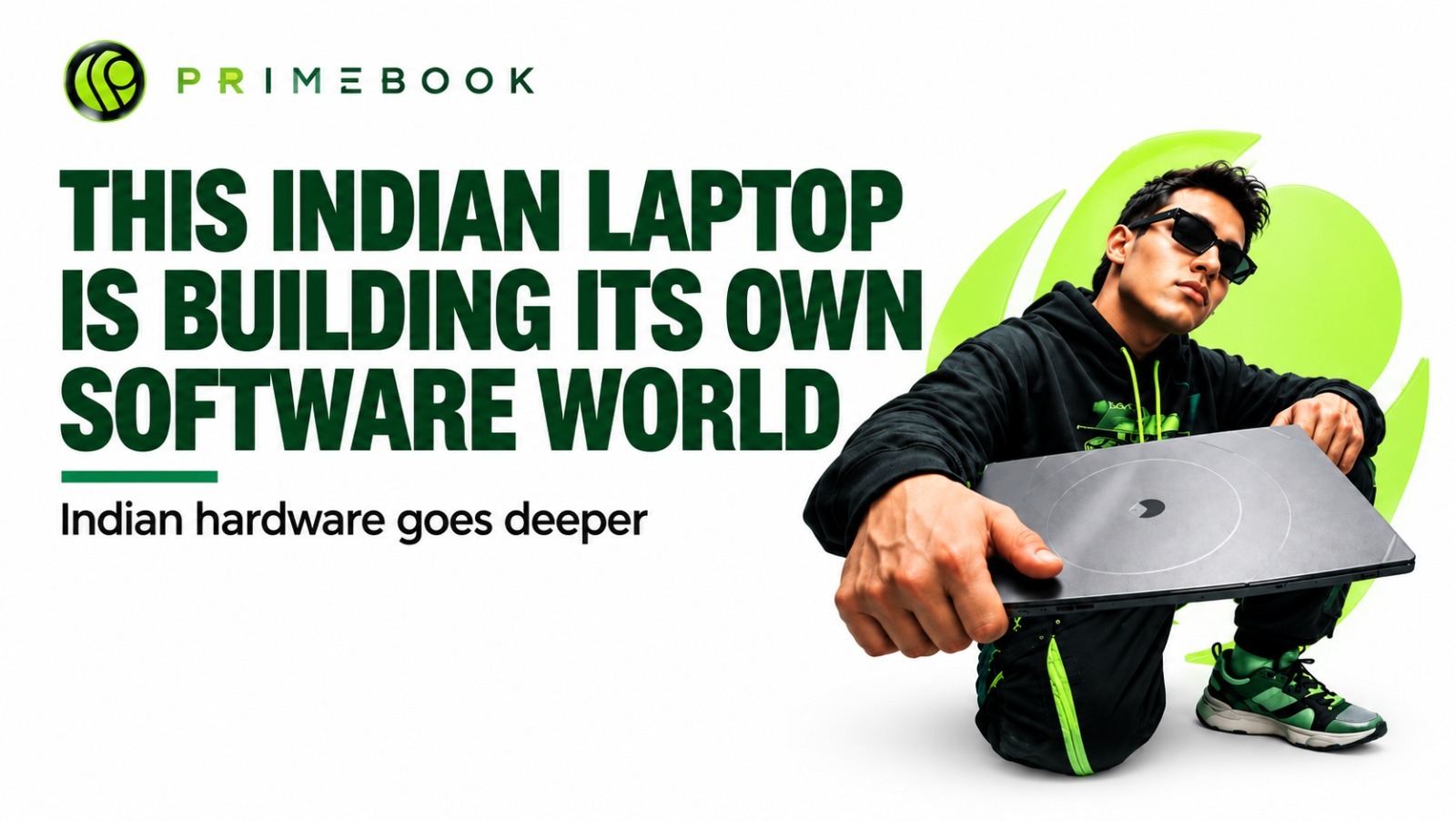
Indian hardware company Primebook is preparing to take its laptop strategy a step further with its third-generation Primebook 3 lineup. Rather than competing only on processor specifications, screen size or price, the New Delhi-based company is building its devices around PrimeOS, its proprietary operating system and a growing collection of software tools.
The approach reflects a broader ambition: to create an integrated personal-computing ecosystem where the hardware and software are designed to work together.
The first model in the new generation, Primebook 3 Max, is scheduled for launch around October 1, 2026, with the Primebook 3 Pro expected to follow later.
A More Powerful Hardware Foundation
Primebook 3 brings a significant hardware upgrade over the company’s previous generation.
The new laptops move to MediaTek’s Genio 720 processor, replacing the Helio G99 used in Primebook 2. The new platform includes an integrated NPU designed to handle AI workloads directly on the device.
Primebook is also moving to 8GB LPDDR5 RAM, compared with LPDDR4X memory in the previous generation. According to the company, the combination can deliver up to 40% higher performance than its predecessor.
The Primebook 3 Max features a 15.6-inch display, a metallic body and upgraded connectivity including Wi-Fi 6, Bluetooth 5.3 and a full-function USB-C port.
But the bigger change is happening underneath the hardware.
PrimeOS Becomes the Bigger Story
PrimeOS has been central to Primebook’s strategy since the beginning. The company’s latest software is based on Android 15 and is designed specifically for laptop-style computing, with desktop multitasking, keyboard and trackpad support, file management and access to Android applications.
With Primebook 3, the company is expanding that ecosystem further.
One of the new additions is PrimeOffice, an in-house productivity suite containing PrimeDocs, PrimeSheets and PrimePresent. The company says the suite provides more than 90% of the functionality users typically need from traditional office software and is designed to work offline.
Bringing Linux Tools to an Android-Based Laptop
Primebook is also targeting users who need more than conventional Android applications.
PrimeOS on Primebook 3 provides access to selected Linux applications and a Linux terminal, allowing users to work with tools such as VS Code, GIMP, LibreOffice, Firefox, Arduino IDE and Postman.
This could make the platform more relevant to developers, engineers and students who previously needed a conventional Windows or Linux laptop for specialised software.
The company also offers cloud-based Windows and Linux environments through its Cloud PC functionality, extending the range of software users can access.
Building More Than Another Laptop Brand
Primebook’s strategy is increasingly about creating an ecosystem rather than simply selling hardware.
Alongside PrimeOS and PrimeOffice, the company is adding tools such as PrimeSecurity and Task Manager to help users monitor applications, system resources and device health. AI capabilities are also becoming part of the software experience.
The Primebook 3 Max is expected to start at ₹35,990, with availability planned through Amazon, Flipkart, Primebook’s website and selected retail partners.
For an Indian hardware company, the interesting part of Primebook 3 is therefore not simply the new processor or upgraded specifications. It is the attempt to control more of the computing experience—from the physical laptop to the operating system, productivity software, AI features and cloud access.
That makes Primebook’s third-generation push less about building another affordable laptop and more about creating an Indian software-hardware ecosystem for personal computing.
Featured to The Startup Caffe
The Startup Caffe brings you the latest stories shaping India’s startup, technology and innovation ecosystem.
Stay connected with us for more insights on founders, emerging businesses, deep-tech products, hardware innovation and the companies building India’s future.